|
History |
Roanoke
Gas Company was organized in 1883, one year after Roanoke became a city, and was
founded by a number of key leaders of their time. The
first President of the Gas Company, Peyton L. Terry, was truly a distinguished
leader in Roanoke and was probably named after Colonel William Madison Peyton,
a very wealthy and cultured person who owned the seven-acre tract known as Elmwood.
Peyton Terry acquired Elmwood following the Civil War in 1868 and married Mary
Shaver Trout, the daughter of prominent citizen John Trout. The
citizens of Big Lick Depot decided to incorporate as a town in 1874, and John
Trout was appointed the first mayor along with six councilmen, including Peyton
Terry. In addition to Peyton Terry, the new gas company was fortunate to have
as investors and directors an outstanding group of leading businessmen that included
John H. Dunston, who served Secretary-Treasurer, J.B. Austin, Alexander S. Asbury,
Mortimer M. Rogers, John P. Pettyjohn, and William Welch. Throughout the early
history of Roanoke, the names of these gentlemen appear frequently in positions
of much importance in the development of the new city. Rogers
and Terry were among a group of businessmen that formed a guaranty company to
purchase land for securing an entrance for the Roanoke and Southern Railroad into
town. Rogers was also a founder of the Virginia Brewing Company in Roanoke. John
P. Pettyjohn was founder of John P. Pettyjohn and Company, a contracting firm
located in Lynchburg. Pettyjohn constructed the N&W Depot that replaced the
Union Station and also constructed Roanoke Country Club. Later, he would build
the N&W office building. William
Welch, a Canadian, was employed by the railroad as the master mechanic. Welch
was also a builder and developer, and ultimately resigned from the railroad, took
out naturalization papers, and became a permanent citizen of Roanoke. Roanoke
Gas can trace its roots to a strong leadership among the leading businessmen of
their day. Such a proud tradition is very enviable and serves to further define
the heritage the Company has enjoyed as one of the oldest business concerns in
Roanoke. Gas
Lighting Enchants the Magic City As
Roanoke began to grow, it was time to replace the old oil and kerosene lamps with
gas. Due
to Hotel Roanoke, the railroad offices, Union Depot and many homes being located
in the northwest section, the first gas plant and mains were located nearby.
On
a one and three-quarter acre tract of land near the foot of Rutherford Avenue,
NE, a brick building was erected having a 32 foot frontage running back 82 feet.
The retort room contained two benches of five retorts each where gas was manufactured.
By standpipes the product passed into a hydraulic main, thence to an exhauster
where it cooled. Now passing into the scrubber, gas was cleansed of ammonia before
going to a purifier. From here it was conducted to a station meter, thence to
the gasometer. The original gasometer…was 60 feet in diameter and 16 feet in height,
but capable of containing only 50,000 cubic feet of gas…Two and one-half miles
of mains were installed before the Company opened for business in November 1883. The
Roanoke World-News January 20, 1962 In
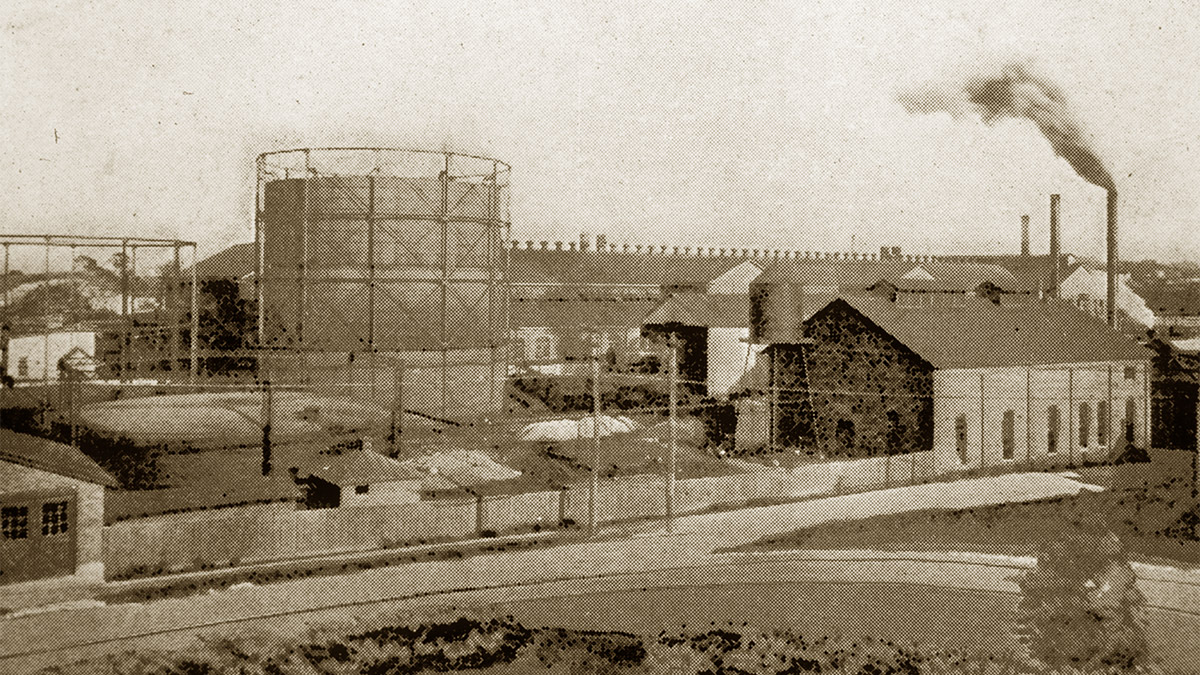
July a contract was let for the construction of the long awaited gas manufacturing
plant to be built on Kimball Avenue at the foot of Rutherford (present location)
by M. Maloney of Philadelphia, at a cost of $51,000. This plant, to manufacture
gas from coal, was the most modern and built in the latest style. A holder 60
feet in diameter and 16 feet high, which with retorts could produce and store
50,000 cubic feet of gas, and capable of producing 100,000 feet per day. The principal
mains were to be 8 inches in diameter, but the majority 4 inches. Being erected
in the northeast section, then the most heavily populated of Roanoke, Hundreds
of potential customers lay almost on the Company’s doorstep. The
History of the City of Roanoke By R.P. Barnes |
Gas
lights were installed in the Hotel Roanoke, then to the railroad depot, which
became the most well lighted place in Roanoke. Inside the Hotel, three large chandeliers
of eight gas lights each illuminated the handsome wood paneled lobby inside the
south entrance. Gas lights were also installed in the newly completed railroad
office building. Roanoke
endured a severe depression in 1884, and gas was slow to replace the kerosene
lights. In 1884, the City Council ordered 16 gas lamps to be placed at key intersections,
no doubt to alleviate the growing concerns about poorly lit streets and the congregation
of people and crime it caused. The
agreement with the City called for the gas lights to be lit at 6:00 p.m. and extinguished
at 11:00 p.m. A young boy, J.R. Williams, was employed at $5 per week to care
for these lamps. He carried a ladder and lit each lamp with a match. A second
round was required to put them out later that night. During the day, he would
make a third round to clean the soot from the large glass globes. At nightfall,
the process would begin all over again. In
1889, the Roanoke Electric Light and Power Company, the successor to Home Electric,
received a franchise to supply the City with electric street lights. Also in 1889,
a big merger occurred for the two leading utilities in Roanoke: the water company
and the gas company. The Roanoke Gas Company and the Roanoke Water Works sold
their assets to the Roanoke Gas and Water Company, whose stock was controlled
by Philadelphia capitalists. Frederick J. Kimball of Philadelphia was President
of the combined gas and water company until his death in 1902. He was a noted
public servant to Roanoke. In
1893, the Gas Company enlarged its plant and installed many lines of new mains.
The Roanoke Electric Light and Power Company was absorbed into the new Roanoke
Street Railway and Electric Company. After less than 10 years, gas lights were
considered "old," and the City awarded a contract to the Electric Company
for 2,000 electric lights. In
1898, the Roanoke Gas and Water Company moved its offices to the corner of Church
Avenue and First Street. Competition for water came into being as the Roanoke-Vinton
Water Company was formed and supplied water to some businesses, including N&W,
at a cheaper price than the Roanoke Gas and Water Company. In order for the Company
to receive its franchise from the City, it had to agree to provide water at no
cost to the schools, city buildings and charitable institutions. No
gas cooking was done in Roanoke until 1891. The first gas range was installed
in the home of E.H. Stewart on South Jefferson Street, which was at the time known
as the Lorraine Apartments. The
stockholders of the Gas and Water Company had become disenchanted and were willing
to sell for virtually any price. A group of Roanoke businessmen, believing in
the future of Roanoke and the Gas and Water Company, purchased the majority of
the stock in 1893. The group even dispatched an agent, Harry M. Darnall, to England
in order to attempt to secure some of the stock held by British syndicates. There
is no record of his success, but the Roanoke group was soon in possession of the
Roanoke Gas and Water Company. This group included S.D. Ferguson, E.M. Funkhouser,
W.S. Battle, James R. Terry, and D.L. Bottomley. E.M. Funkhouser would serve as
President and General Manager until 1912. The
original September 25, 1883, 25 year franchise with the City of Roanoke was set
to expire in 1908 and its provisions included authorization for the City to purchase
the gas property. However, the City chose to extend the franchise, this time for
30 years. The
new local management group provided dynamic leadership and guided the Company
as it greatly improved its equipment. The gas plant included 42 retorts, three
gas holders with a capacity of 375,000 cubic feet, and a Lowe Water Set. The Company
had a total of 35 miles of mains serving its customers. Coke
was a by-product of the manufactured gas process and was given away free to anyone
who would haul it away until 1910, when the Company began to charge a nominal
fee for its coke. In addition, the Company also sold large quantities of its coal
tar every year. In
1910, Roanoke Gas and Water Company moved its offices to the Anchor Building on
Shenandoah Avenue, where it would stay for 21 years. On
May 15, 1912, the assets and franchises of the Roanoke Gas and Water Company were
sold to C.H. Geist and Associates of Philadelphia and Roanoke Gas Light Company
was formed. It was at this juncture that the gas company and water company assets
were divided into two separate companies once again. The new Roanoke Gas Light
Company had three managers between the years 1912 an 1917, two of them were Marshall
Milton and W.J. McCorkindale. In
1912, the Gas Company had 2,982 customers and was manufacturing approximately
250,000 cubic feet per day at its gas plant. Over the next 10 years, the business
had grown so much that there was a concern that the gas plant could not manufacture
enough gas. To alleviate this problem, a larger unit, consisting of a seven-foot
water gas unit, was added in 1923 at a cost of $50,000. The next year, in 1924,
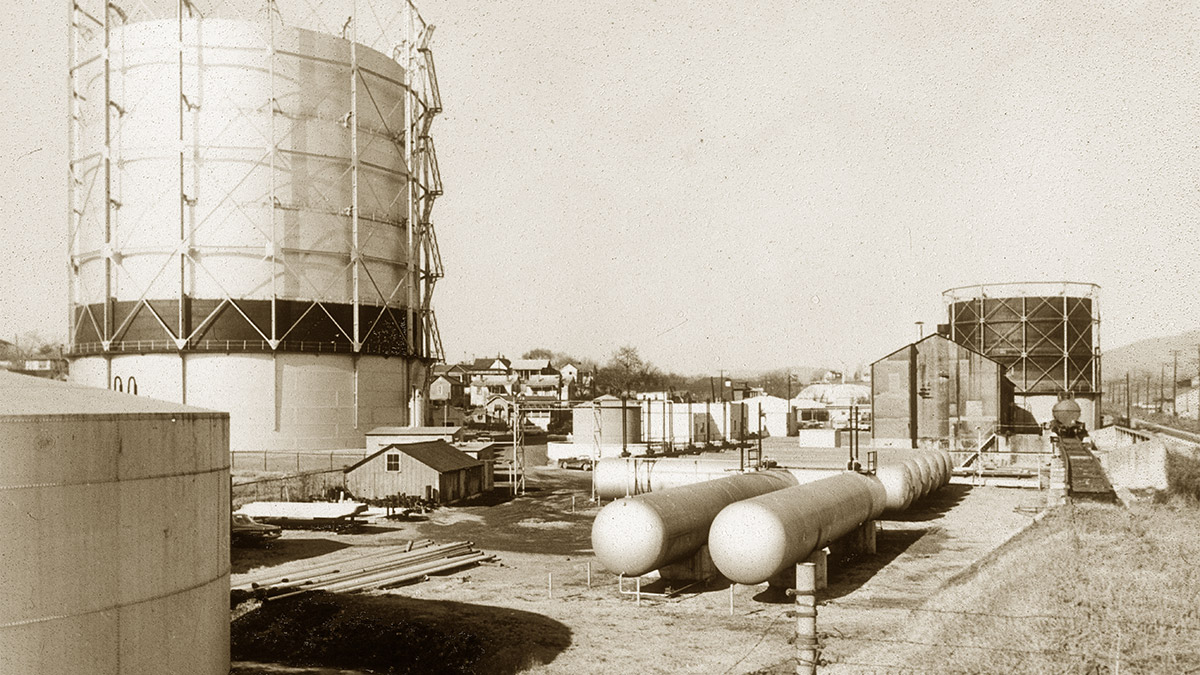
a new coal gas plant was constructed in order to provide the Gas Company with
the most modern and efficient gas plant design available. The new holder was capable
of storing 1,500,000 cubic feet and was, at the time, one of the largest anywhere
in Virginia. In
November of 1927, the Gas Company was sold to Central Public Service Corporation,
but kept the same Roanoke Gas Light Company name. During
the rapid growth of the 1920s, gas mains were extended in 1928 to Salem and Vinton
and other outlying suburbs at the time, including South Roanoke. A branch office
was opened in Salem upon the completion of the gas main extension and the securing
of a franchise with the City of Salem. In 1928, the first gas refrigerator came
to Roanoke. On
January 1, 1931, the Company moved into new quarters at 121 Church Avenue. The
primary reason for the move to new offices was to accommodate the new District
Accounting Office, which was to provide economies of scale for approximately 30
gas, transportation and ice companies. Services included billing and general accounting,
and Roanoke was to be the headquarters for the district that included Virginia
and Tennessee. In
1933, the Gas Company stock was acquired by the Consolidated Electric and Gas
Company of New York, following financial difficulties that overcame the Central
Public Service Corporation. In 1935, Congress enacted the Public Utility Holding
Company Act, PUHCA, which vested the responsibility of regulating the operation
of holding companies to the Securities and Exchange Commission. The PUHCA forced
fragmentation of large monopolies, such as Consolidated Electric and Gas of New
York, that had been controlling the gas, electric, water, telephone and transportation
systems, such as the Roanoke gas system. In
1939, the name of the gas company was changed from Roanoke Gas Light Company to
Roanoke Gas Company. As of 1940, the Gas Company had approximately 12,500 customers
and more than 200 miles of gas mains. Headquartered in New York, Stone & Webster
moved a number of key managers through the Roanoke Gas system from 1933 to 1943.
In 1936, R.C. Hoffman, Jr. served as President, succeeded by E.J. Meade in 1940,
Duncan A. Crawford in 1942, and H.A. Murphy in 1943. As
a result of the Public Utility Holding Company Act, actions taken by the SEC caused
many of the holding companies to sell their public utility stock and relinquish
control. Such was the case in 1944 with Consolidated Electric and Gas when the
Roanoke Gas Company stock was sold to Scott, Horner & Mason, Inc. and made
available to the public, exclusively to the residents of the state of Virginia.
Roanoke Gas Company, originally founded by local business leaders, later repurchased
by local business leaders, and having undergone various name and ownership changes
along the way, was once again available for purchase by local business leaders,
residents, and customers and was to be know as Roanoke Gas Company. During this
time a former employee, Michael E. Shea, became the new President. Growth
of the Gas Company continued throughout the 1940s as plans were developed to bring
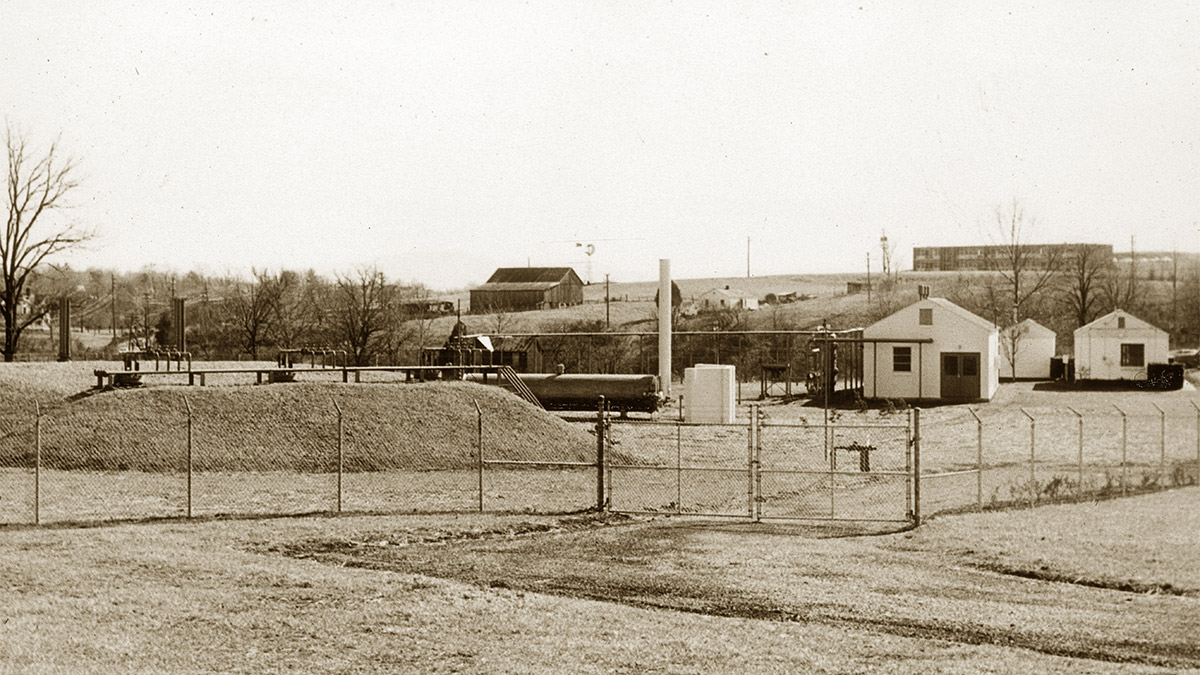
natural gas to Roanoke. In 1950, Roanoke Gas received its certificate from the
Federal Power Commission and organized the Roanoke Pipe Line Company to build
a 30-mile pipeline from Gala, Virginia to Roanoke. The pipeline was completed
during the late summer of 1950 and natural gas was first introduced to Roanoke
homes and businesses on August 26, 1950. Shea resigned as President of Roanoke
Gas and John C. Parrott became President of the merged companies of Roanoke Gas
and Roanoke Pipe Line Company, which was to be called Roanoke Gas. (The merger
actually took place in 1957.) The
new natural gas rates were approximately 20 percent lower than manufactured gas
rates that were in effect in 1950 for Roanoke Gas. Also, the BTU content of natural
gas was nearly double that of manufactured gas, so the customers were getting
significantly more for their heating dollar with natural gas. In the early 50s
gas sales rose considerably and in 1955 Roanoke Electric Steel, GE, Virginia Railway
and the new N&W Shops came on line. Roanoke
Gas Company received several important awards from the American Gas Association
in 1959. E.V. Bowyer was elected to the "Hall of Fame" for his outstanding
sales work, and the Company received two awards. One was for achievement in commercial
sales, and the other was for excellence in advertising. Growth
continued in the early 60s to 20,387 customers and net income topped $300,000.
To help alleviate its dependence on the one Atlantic Seaboard Corporation pipeline,
the Company entered into discussions with East Tennessee Natural Gas Company about
extending a pipeline from Bristol to Roanoke. The benefits of this pipeline would
be significant to Roanoke Gas. Gas consumption passed 4,000,000 thousand cubic
feet for the first time in 1964. Dividends rose to $1.10 and a five percent stock
dividend was approved by the Board. The
Company continued to win awards from the American Gas Association for its advertising
programs. In 1966, AGA presented its "Best Advertising Campaign" award
to the Company for its newspaper ads that promoted gas and the importance of service
to its residential customers. During
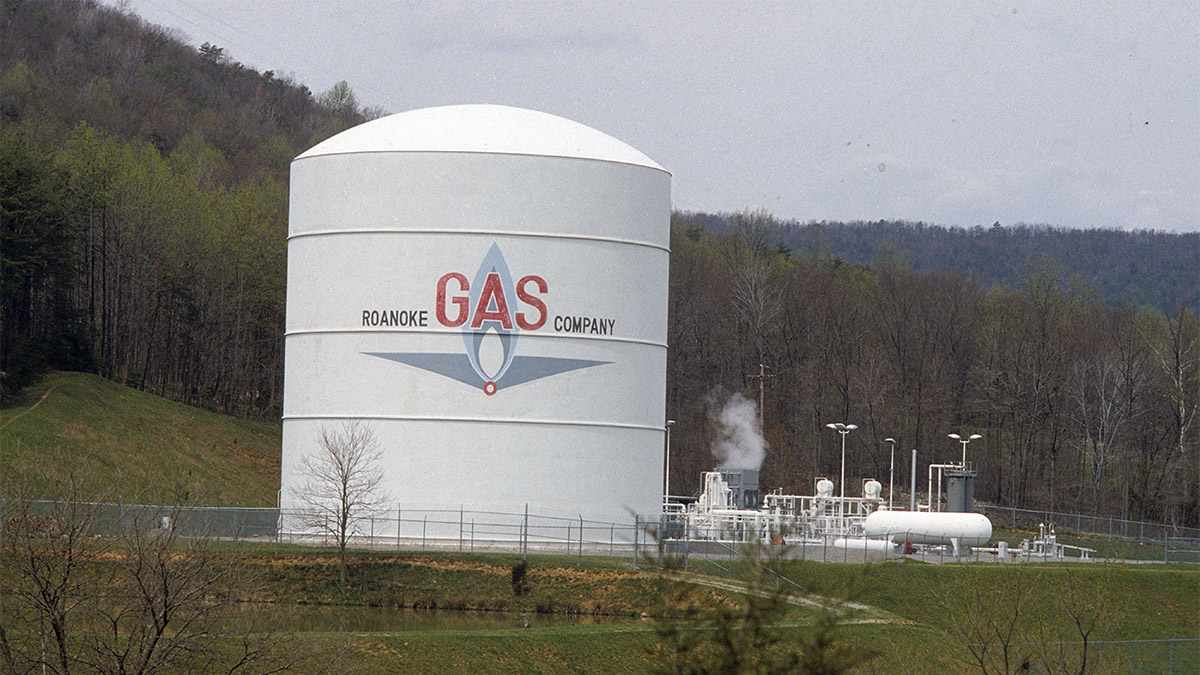
1970, the Company entered into a 20-year lease with the Industrial Development
Authority of Botetourt County for the location of a new gas liquefaction and storage
facility. The contract was signed with Chicago Bridge and Iron to construct the
LNG plant to be operational by 1972. The LNG plant would enable the Company to
move away from its reliance on propane air for natural gas peak shaving. Such
a project had been studied before, but was not considered to be economically feasible
until a deal was struck with Lynchburg Gas to purchase LNG during peak periods.
The additional revenue from outside LNG sales made the numbers work. In
1972, John Parrott was elected as Chairman and CEO and Albert W. Buckley became
President. In
1974, as the energy crisis continued to affect the nation, the Company was forced
to adopt a no-growth posture to protect existing customers until such time as
the gas supply situation improved. In 1975, operating revenues surpassed $13 million,
and the dividend rose to $1.46. The Company experienced the fifth consecutive
year of warmer than normal winter weather. The
Company believed that improvement in the gas supply outlook was expected. In 1977,
the Company asked the State Corporation Commission for approval to add customers
to replace those lost through attrition, and this request was granted. This action
ended the moratorium that had existed since 1972. More
than any other event in the history of the natural gas industry, the moratorium
that affected the entire nation did more to diminish natural gas marketing efforts
and to curb the strong growth the industry had enjoyed until the early 1970s. Beginning
in 1978, the aggressive sales campaigns were restored, and efforts were made to
recapture lost market opportunities from the moratorium. The Company’s advertising
program was having a beneficial effect, and the Company boasted that 90 percent
of all new homes were using gas. By
1980, there had been some improvement in the gas supply situation, and the benefits
were obvious. Operating revenues were up more than $29 million, and the dividend
was increased to $1.15. The weather was essentially normal and the customer count
was once again over 30,000. The
100th anniversary of Roanoke Gas was celebrated in 1983. The annual
report cover was titled "Burning Bright Since 1983." The outlook for
the future was greatly dependent on just one major factor – the stabilization
and/or reduction of gas costs. In
1984, the consolidated revenues rose to more than $46 million, which were five
percent above those of 1983. The Company attributed the rise to several factors,
including colder than normal weather, increased LNG sales and a noticeable reversal
in conservation trends by its customers, which numbered 32,504. On
July 31, 1986, Al Buckley retired and Edward C. Dunbar became President. During
the Buckley years, revenues had quadrupled, profits doubled, and the dividend
had been increased from $0.55 to $1.80. In
1991, Edward Dunbar retired and Frank A Farmer, Jr. became President and CEO. Weather
continued to play a very important role in the overall earnings picture for the
Company. With only 3,458 heating degree days during the 1991 fiscal year, it was
a full five percent warmer than the previous warmest winter on record, which occurred
in 1974. With the large percent of gas sales devoted to residential heating, the
Company had always remained very dependent on winter weather for good earnings. In
July of 1993, the City of Roanoke attempted a hostile takeover of the Company
as the franchise expired. By calling for citizen and customer support, the Company
promptly defeated the attempt and won a public relations award from the American
Gas Association for its efforts. The
HeatShare Program continued to be a major help to needy families during the winter
of 1994. After 12 winters, the Company estimated that nearly three-quarters of
a million dollars had been contributed to assist more than 5,100 families. The
year 1996 produced record revenues and earnings. Revenues were $69 million, up
35 percent as weather was 11 percent colder than normal. The Company surpassed
the 50,000 customer mark during the year, and ended the year with a total of 51,904
natural gas customers.
In
February 1998, John B. Williamson, III became President.
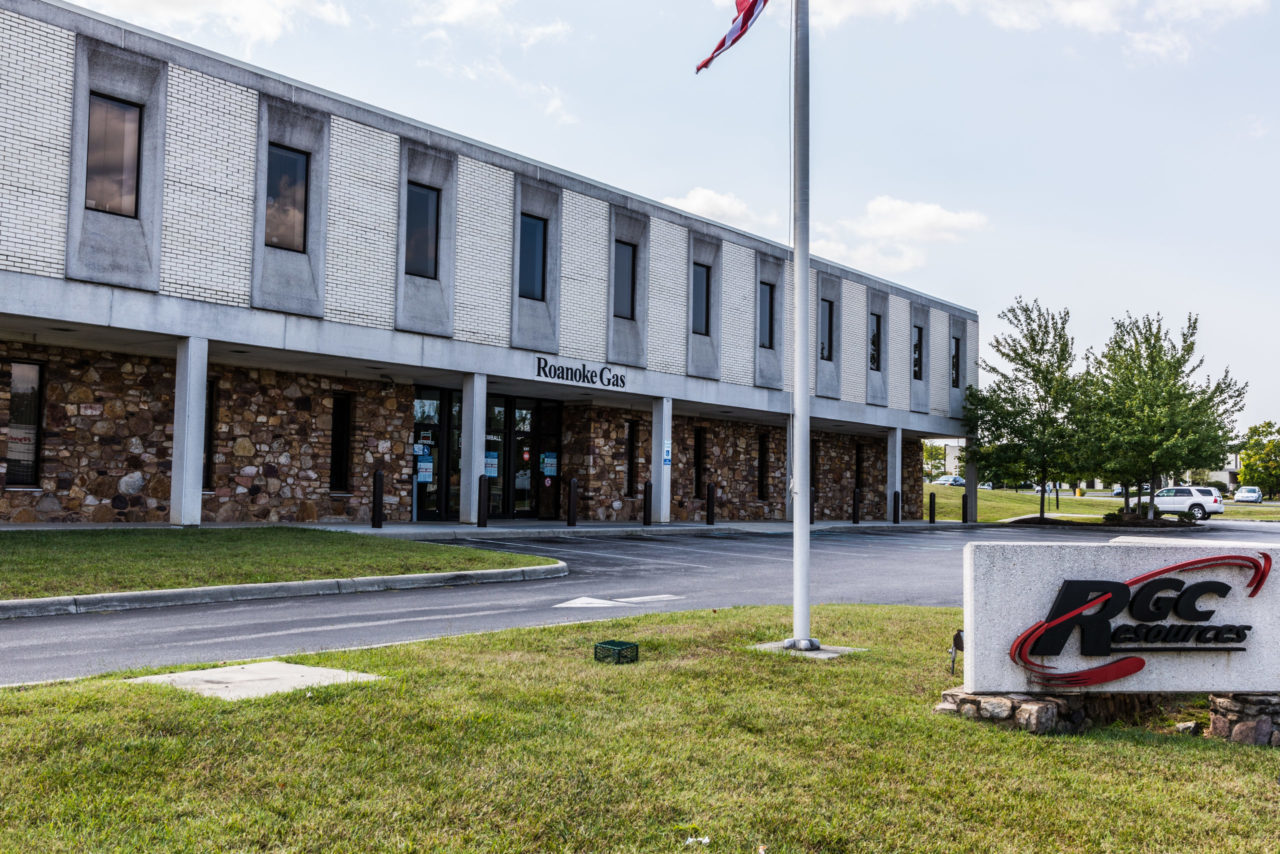
In 1999, with the company reorganization and the establishment
of the holding company RGC Resources, Inc., John Williamson
became President & CEO of RGC Resources and Art Pendleton
was appointed President and COO of Roanoke Gas. Currently,
John Williamson is President, Chairman, and CEO of RGC Resources
and Roanoke Gas Company. John Williamson is currently President,
Chairman and CEO of RGC Resources and Roanoke Gas Company.
|